
 +91 900 483 2326
+91 900 483 2326
+91 900 483 2326
Installing a wind turbine is not simply a matter of bringing in a high-capacity crane. The required crane depends on the nacelle and component weight, wind turbine hub height, lifting radius, blade dimensions, site access, ground conditions and wind conditions.
For wind EPC contractors, project managers and lifting teams, choosing the right wind turbine crane rental solution early can help coordinate crane mobilisation, lift planning and turbine installation around the project schedule.
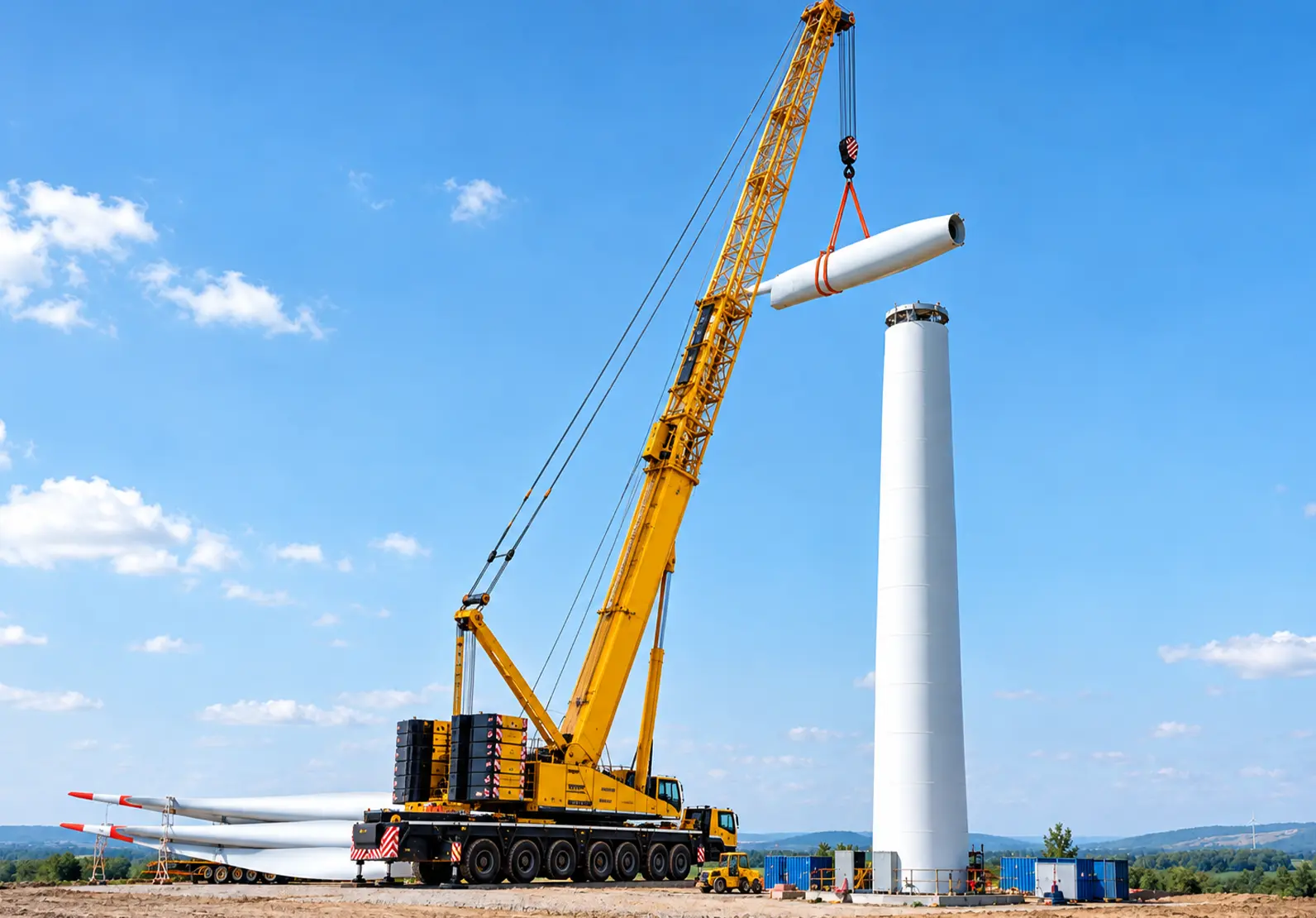
The crane should be selected from the actual lifting requirement, not just the turbine's rated capacity.
| Project requirement | Why it matters for crane selection |
|---|---|
| Nacelle weight | Determines required lifting capacity |
| Hub height | Determines required hook height and boom configuration |
| Lifting radius | Affects the crane's available capacity |
| Blade length | Influences lifting arrangement and clearance |
| Ground conditions | Determines crane setup and support requirements |
| Site access | Affects crane mobilisation and assembly |
| Wind conditions | Can restrict lifting operations |
| Installation schedule | Determines deployment and crane utilisation |
These factors should be reviewed together before finalising the crane.
Wind turbine components are lifted at significant heights and often on sites where access, terrain and weather can affect execution.
A typical installation may involve lifting:
Each lift can have a different weight, radius and configuration requirement. The crane that works for one stage may not automatically be suitable for another.
This is why crane lift planning should be completed before mobilisation, particularly for large turbine components and projects with multiple installation locations.
As turbine hub height increases, the crane needs sufficient hook height and reach to position the component safely.
However, greater height does not mean simply choosing the crane with the longest boom.
The project team also needs to evaluate:
The final crane configuration should therefore be established from the actual lift plan and manufacturer's load chart.
Blade lifting can be particularly sensitive to site and weather conditions because of the blade's length, shape and exposure to wind.
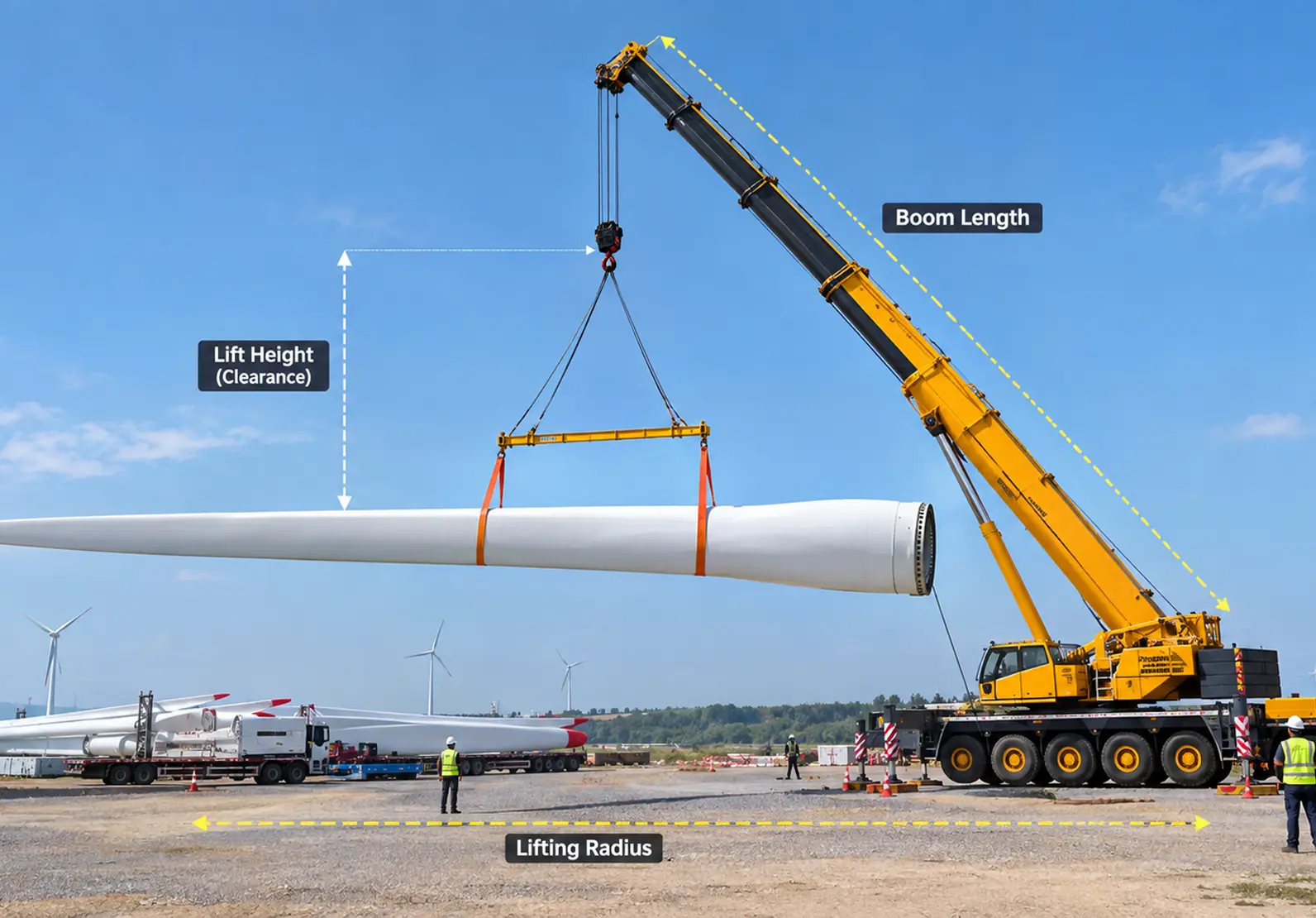
Before a wind turbine blade lifting operation, the lifting team should confirm:
The project team also needs to evaluate:
The lift plan should account for the complete movement of the component rather than only the initial pick.
There is no single crane type that fits every wind project. The selection depends on turbine specifications and site conditions.
Crawler cranes can be considered for large wind turbine installations where high capacity, reach and stability are required.
Their configuration can be adapted for demanding lifting requirements, but the project must also account for transportation, assembly, ground preparation and movement between turbine locations.
For heavy infrastructure and wind-related lifting requirements, Express Cranes provides high-capacity crawler crane solutions. See the crawler crane rental service for available configurations and applications.
All-terrain and mobile crane configurations can be useful where road mobility, access and faster deployment are important.
Their suitability depends on the required capacity, lifting radius, terrain and setup conditions. They should be evaluated against the actual lift rather than selected only because they are easier to mobilise.
A wind turbine crane rental should be planned around the complete installation sequence.
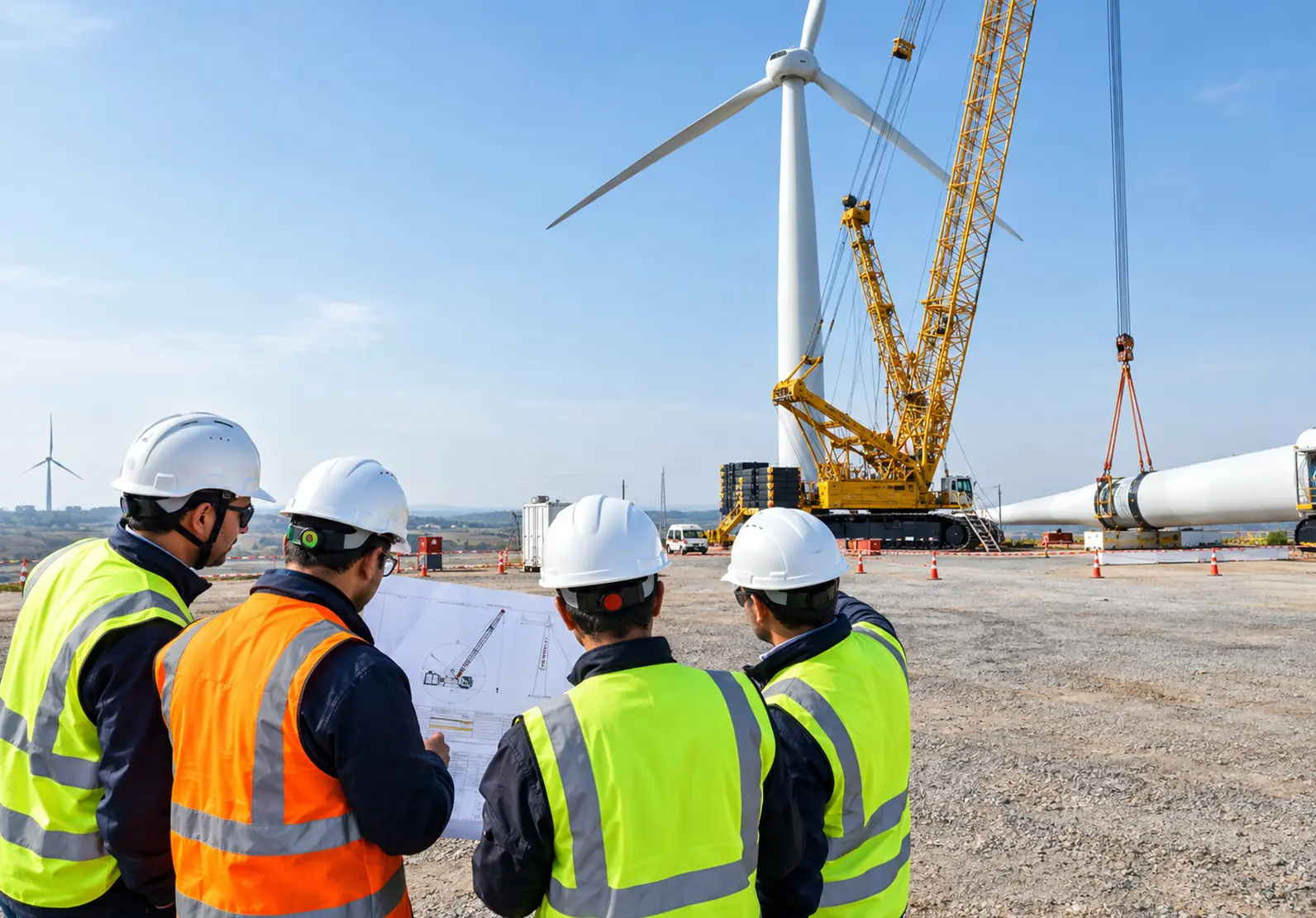
Before the crane is mobilised, the project team should establish:
This information allows the crane configuration to be assessed before equipment reaches the site.
For larger wind projects, mobilisation itself can become a significant planning activity. Crane sections, counterweights, attachments and support equipment may require separate transport and site preparation.
Wind projects are often located in areas where roads, gradients, turning areas and ground conditions can restrict heavy equipment movement.
Before selecting a crane, the team should evaluate:
A crane with adequate lifting capacity may still be impractical if it cannot reach the installation location or be assembled safely.
Wind is an important operational consideration during turbine installation, particularly when handling large blades and other components with significant surface area.
The lifting plan should therefore define the applicable operating limits based on the crane manufacturer's requirements, component characteristics and project-specific procedures.
The objective is not simply to have a crane on site, but to have the right crane configuration available during the planned lifting window.
For a more accurate crane assessment, provide the rental team with as much project information as possible.
At minimum, share:
The more complete the information, the easier it is to evaluate the appropriate crane configuration before mobilisation.
Before confirming the crane, check:
A successful wind turbine installation depends on more than crane capacity. Wind turbine crane rental should be planned around component weight, hub height, lifting radius, site conditions, wind limitations and mobilisation requirements.
For EPC contractors and project teams, evaluating these factors before deployment can help avoid selecting a crane that is technically capable on paper but unsuitable for the actual lift.
If you are planning a wind turbine installation, share the turbine/component weight, hub height, lifting radius, site location and installation schedule with the crane rental team so the required crane configuration can be assessed before mobilisation.
Explore Express Cranes' crane rental services for heavy lifting requirements across India, or browse the crane rental blog for additional guidance on capacity, lifting and project planning.