
 +91 900 483 2326
+91 900 483 2326
+91 900 483 2326
A crane rated for 100 tons cannot always lift 100 tons.
Actual crane lifting capacity changes depending on:
This is one of the biggest reasons lifting failures, unsafe operations, and project delays happen on industrial and construction sites.
For example, a crane may safely lift heavy loads at a shorter working radius, but the same crane can lose significant lifting capacity when the boom extends farther from the centerline.
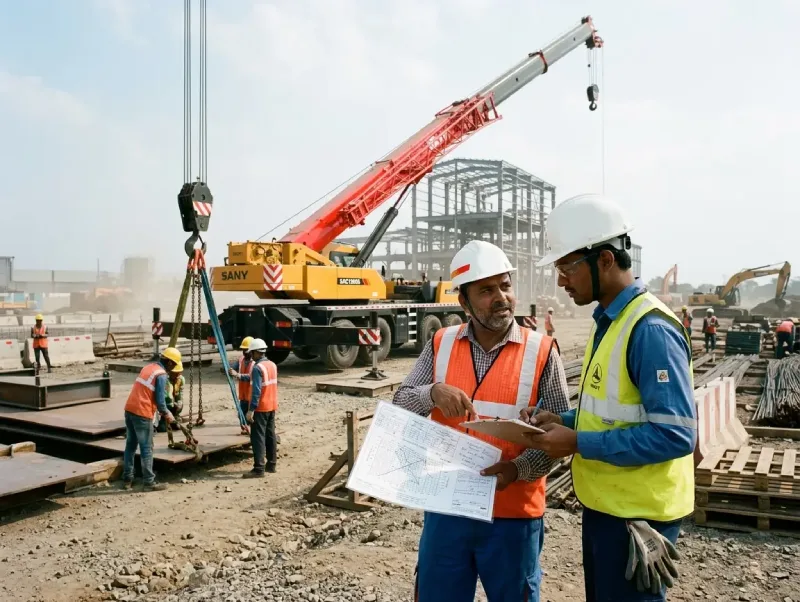
Understanding these limits is critical for:
In this guide, you'll learn:
Download Guide
Before planning any heavy lift, reviewing a crane load chart helps understand safe lifting limits at different boom lengths and working radius.
Crane capacity refers to the maximum load a crane can safely lift under specific operating conditions.
However, crane capacity is not fixed.
A crane rated at:
can only lift those loads under certain configurations and lifting conditions.
Actual lifting capacity changes based on boom extension, lifting radius, counterweight setup, and ground stability.
This is why crane operators and lifting engineers always refer to crane load charts before lifting operations.
Many project teams assume crane lifting capacity only depends on crane size, but several operational factors directly affect safe lifting limits.
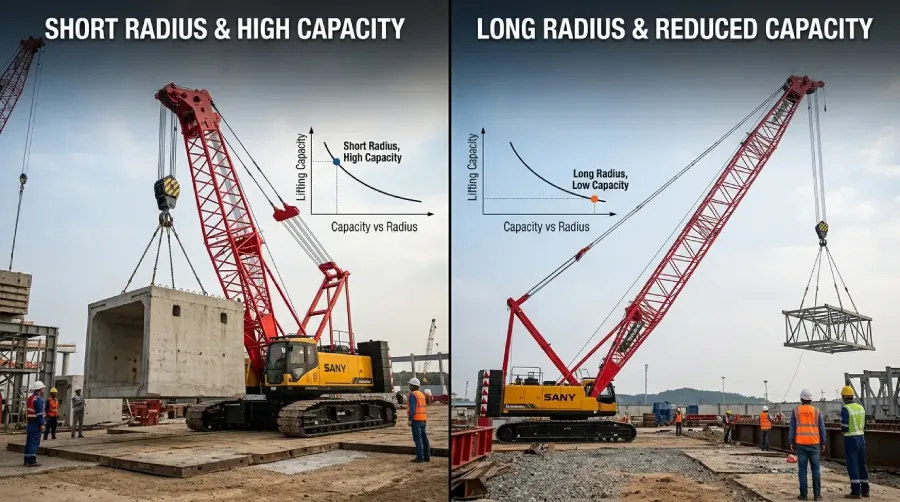
Lifting radius is the distance between:
As lifting radius increases, crane capacity decreases.
For example:
This is one of the most important factors in lift planning.
Longer boom extensions reduce crane stability and lifting capability.
A crane operating with shorter boom configuration can usually lift heavier loads compared to:
Weak or uneven ground can affect crane stability significantly.
Improper ground preparation may lead to:
Heavy lift projects often require:
Counterweights help stabilize the crane during lifting operations.
Incorrect counterweight configuration can reduce safe lifting capacity and increase operational risk.
It is one of the most important safety references during lifting operations.
It shows:
Before every heavy lift, operators and lifting teams review the load chart to confirm:
Load Chart Element |
Purpose |
|---|---|
| Boom Length | Determines lifting reach |
| Working Radius | Distance between crane and load |
| Rated Capacity | Maximum safe lifting limit |
| Counterweight Configuration | Crane stability setup |
| Outrigger Position | Crane support condition |
Ignoring load chart limitations can lead to:
One of the most misunderstood concepts in crane operations is rated capacity.
Rated crane capacity does not mean the crane can safely lift that weight in every situation.
Actual safe lifting load depends on:
For example, a 100T crane lifting inside a restricted refinery layout may operate at much lower safe capacity compared to an open construction site because working radius and operational conditions change significantly.
This is why lift planning is critical before crane deployment.
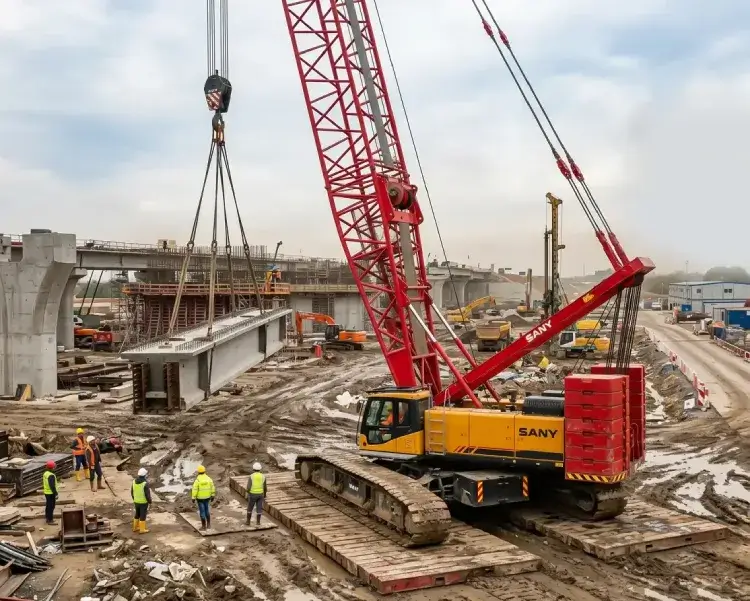
Many lifting failures happen because project teams underestimate operational factors affecting crane stability and load handling.
Even experienced project teams can face lifting issues if crane configuration is not matched properly to site conditions.
Different crane types are designed for different lifting applications and site conditions.
Best for:
They offer:
Used for:
Crawler cranes provide:
Suitable for:
These cranes combine:
Choosing the wrong crane can increase:
Before selecting crane capacity, project teams should evaluate:
Oversized cranes increase mobilization cost, while undersized cranes create operational and safety risks.
Proper lift planning helps improve:
Before crane deployment, lifting teams should ensure:
For critical lifting operations, engineered lift planning is strongly recommended.
Crane capacity refers to the maximum load a crane can safely lift under specific operating conditions.
As the load moves farther from the crane centerline, lifting stability decreases, reducing safe lifting capacity.
A crane load chart shows safe lifting limits based on boom length, working radius, and crane configuration.
No. Actual lifting capacity depends on lifting radius, boom setup, rigging weight, and operating conditions.
Weak or uneven ground can reduce crane stability and create unsafe lifting conditions.
Crawler cranes and heavy lift all terrain cranes are commonly used for large infrastructure and industrial projects.