
 +91 900 483 2326
+91 900 483 2326
+91 900 483 2326
Choosing the wrong crane can increase project costs, delay lifting operations, and create unnecessary safety risks.
A crane that works perfectly for factory equipment installation may be completely unsuitable for bridge construction, refinery shutdowns, metro projects, or heavy infrastructure work.
The challenge is that each crane type is designed for different:
Before selecting a crane, project teams need to evaluate not only the load weight but also lifting radius, site access, setup space, and project duration.
This guide explains the most commonly used cranes in construction and industrial projects, compares their strengths and limitations, and helps you choose the right crane for your lifting requirements.
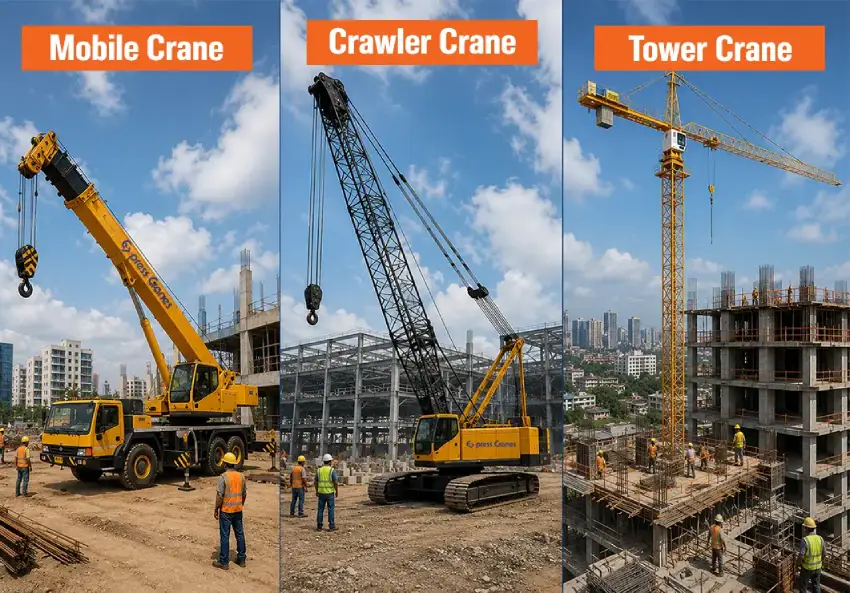
Project Type |
Recommended Crane Type |
|---|---|
| Factory Equipment Installation | Mobile Crane |
| Industrial Shutdown | All Terrain Crane |
| Bridge Construction | Crawler Crane |
| Metro Rail Project | Crawler Crane |
| High-Rise Construction | Tower Crane |
| Wind Turbine Installation | Heavy Lift Crane |
| Machinery Relocation | Mobile Crane |
| Refinery Project | All Terrain or Crawler Crane |
If you're unsure which crane capacity is suitable for your project, understanding crane load limits and lifting radius is equally important before crane selection.
No single crane is suitable for every lifting operation.
A crane selected for urban construction may not perform efficiently on soft ground infrastructure sites, while a crane designed for heavy lifting may be impractical for short-duration industrial work.
The right crane depends on:
This is why construction companies evaluate project requirements before finalizing crane deployment.
Mobile cranes are among the most widely used cranes in construction and industrial projects because they can travel easily between sites and require minimal setup time.
20T-100T+
Rental costs for mobile cranes vary based on crane capacity, project duration, and operating conditions.
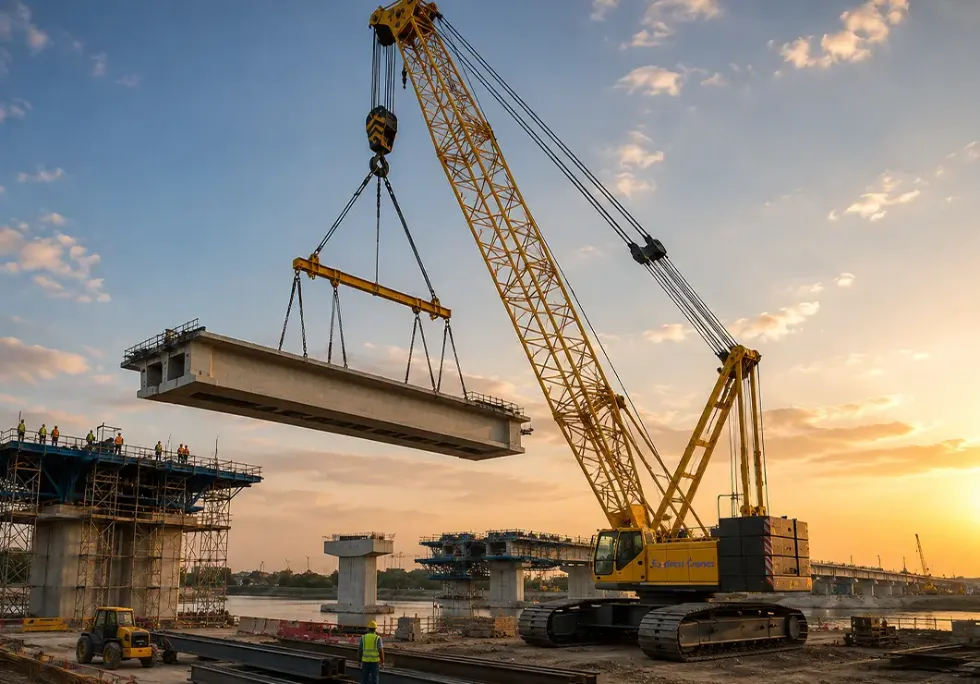
Crawler cranes are designed for heavy lifting and large-scale infrastructure projects.
Unlike mobile cranes, crawler cranes move on tracks, providing greater stability and load handling capability.
100T-900T+
Crawler cranes are commonly selected when projects require heavy loads to be lifted at greater heights or working radius.
All terrain cranes combine road mobility with strong lifting performance.
They are frequently used for industrial and infrastructure projects where cranes must travel between locations while handling heavier loads.
100T-600T+
Heavy lift cranes are used when projects involve oversized equipment, large structural components, or critical infrastructure lifts.
500T-900T+
This is one of the most common questions in crane selection.
Factor |
Mobile Crane |
Crawler Crane |
|---|---|---|
| Mobility | Excellent | Limited |
| Setup Time | Faster | Longer |
| Heavy Lifting | Moderate | Very High |
| Infrastructure Projects | Limited | Ideal |
| Transportation Cost | Lower | Higher |
For short-duration industrial lifting, mobile cranes are often more economical. For bridge construction, metro projects, and large infrastructure work, crawler cranes typically offer better lifting capability and stability.
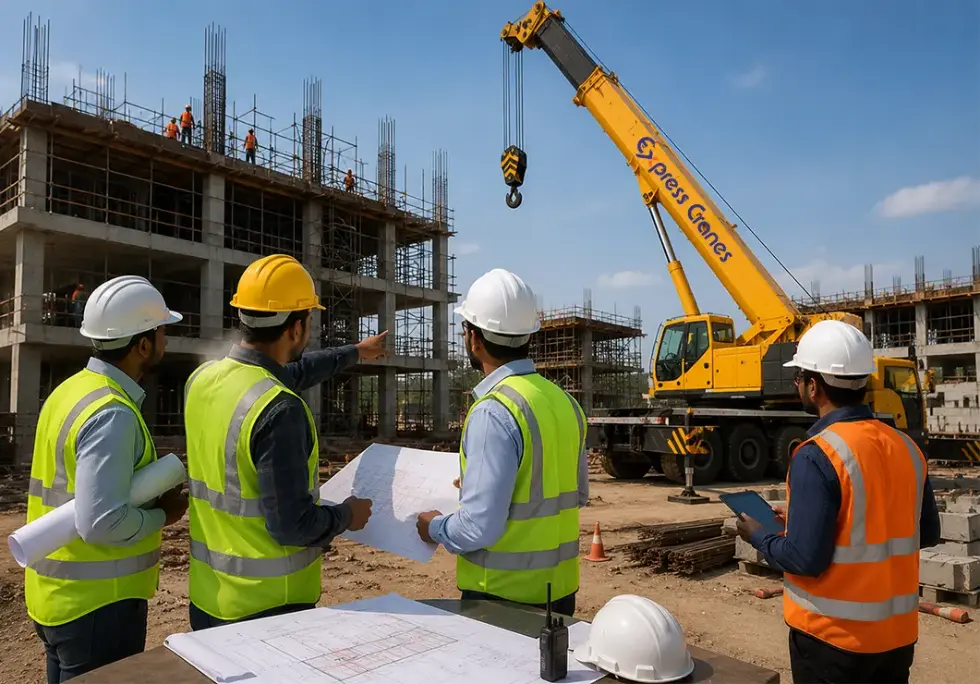
Before selecting a crane, evaluate:
Determine actual load weight including rigging equipment.
Longer radius reduces lifting capacity and affects crane selection.
Restricted layouts may limit crane movement and setup.
Soft or uneven ground may require crawler cranes or engineered support systems.
Short-term projects often favor mobile cranes, while long-term infrastructure projects may justify crawler crane deployment.
Many lifting delays occur because crane selection is based only on load weight.
Common mistakes include:
Proper lift planning helps avoid unnecessary project costs and operational delays.
Mobile cranes are among the most commonly used cranes because of their flexibility, mobility, and suitability for a wide range of lifting applications.
Crawler cranes are widely used for bridge projects due to their stability and high lifting capacity.
Mobile cranes travel on roads and require less setup, while crawler cranes provide greater lifting stability and are preferred for heavy infrastructure projects.
Tower cranes are commonly used for high-rise construction because of their vertical lifting capability.
Crane capacity should be selected based on load weight, lifting radius, site conditions, and project requirements rather than crane tonnage alone.