
 +91 900 483 2326
+91 900 483 2326
+91 900 483 2326
A refinery shutdown is not the time to discover that the selected crane cannot reach the required radius, cannot be positioned safely, or cannot be mobilised within the shutdown schedule.
Refinery crane rental requires more than selecting a crane based on tonnage. The load weight, lifting radius, boom configuration, ground conditions, access, equipment location and available shutdown window all have to work together.
For EPC contractors, refinery maintenance teams and project engineers, the objective is simple:
get the right crane configuration to site, ready for the planned lift, without creating delays in a tightly controlled turnaround.
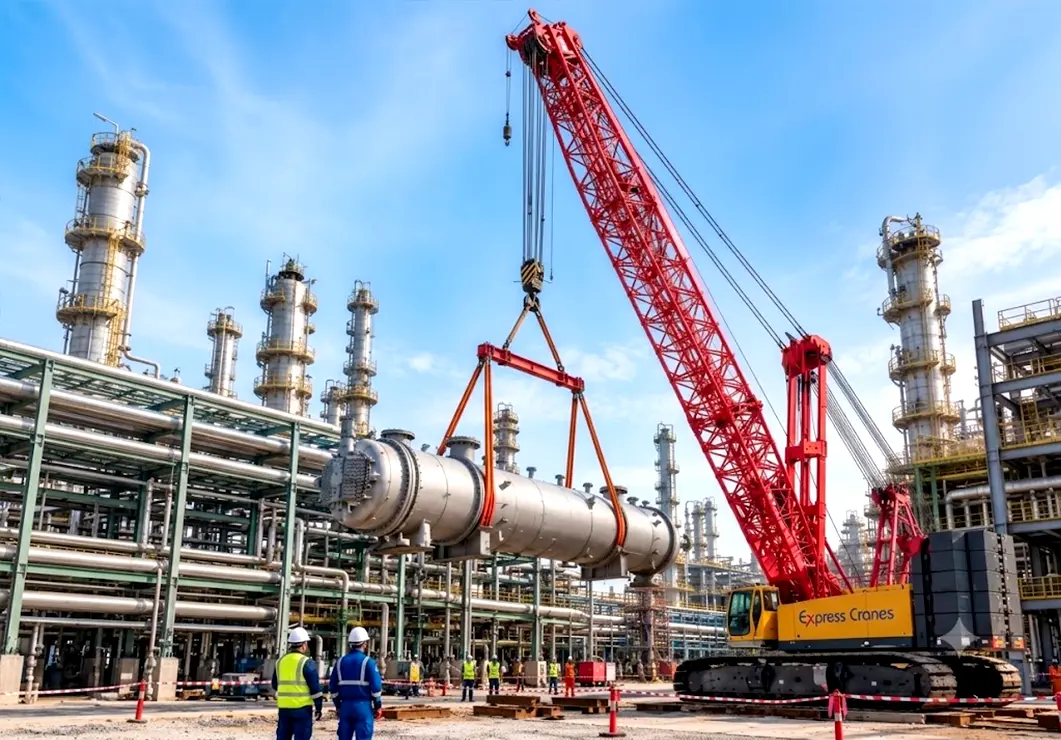
During a refinery turnaround, several lifting activities can happen within a limited period.
Equipment may need to be removed, shifted, maintained and reinstalled while other contractors are working around the same area.
Common requirements can include:
A crane that looks suitable based on capacity alone may not be suitable once lifting radius, boom length, access and site constraints are considered.
This is why refinery shutdown crane rental should begin with the lifting requirement rather than simply asking for a particular tonnage.
The first step is to establish the actual lifting conditions.
Start with the verified weight of the equipment, including relevant lifting accessories and rigging. The crane's rated capacity should then be checked against the actual operating configuration.
For heavy refinery equipment, capacity should never be considered independently of the working radius.
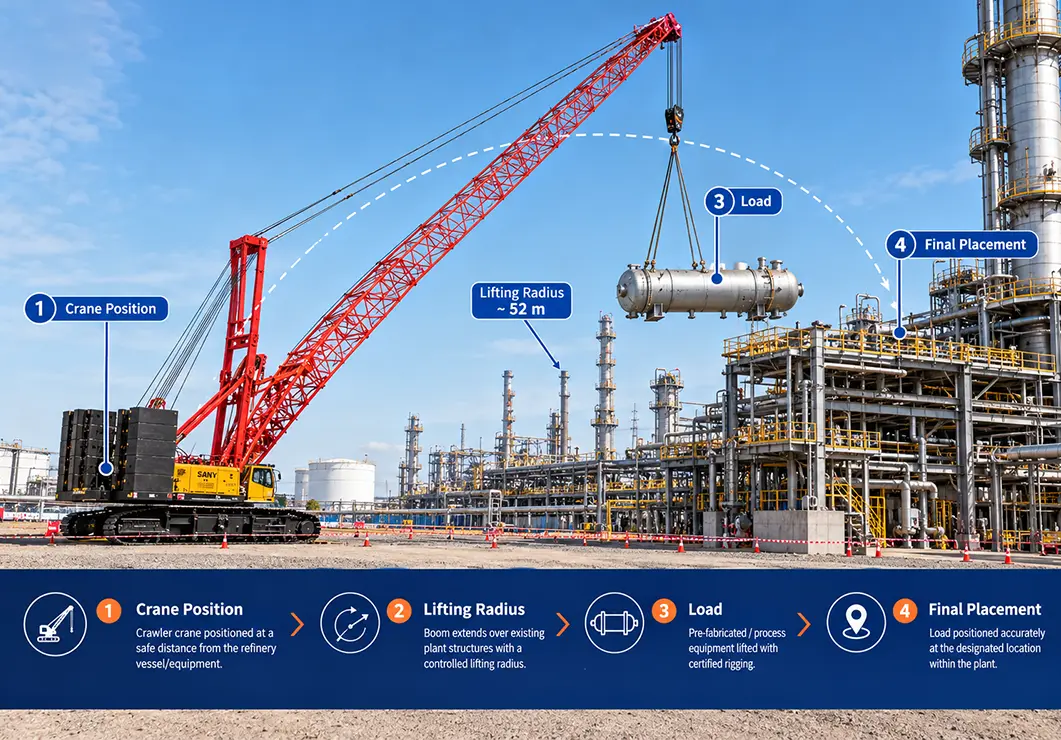
The crane may have sufficient rated capacity at a short radius but considerably less capacity at the actual lifting radius.
For example, a lift involving a heat exchanger inside a congested plant area may require the crane to work farther away from the load because nearby structures, pipe racks or equipment restrict access.
The required crane therefore depends on the load + radius + boom configuration, not simply the load weight.
For more detail on how these factors affect safe lifting limits, see our guide to crane capacity and load limits.
Refineries often have limited working space, existing structures, pipe racks, process equipment and designated access routes.
Before mobilisation, the team should confirm:
A crane that meets the lifting requirement on paper may still be unsuitable if it cannot physically be positioned where the lift requires it.
The appropriate machine depends on the lift and site conditions.
All terrain cranes can be useful when the project requires high lifting capacity together with road mobility and relatively quick deployment.
They can be considered for refinery maintenance, equipment installation and shutdown activities where access and mobilisation are important.
Crawler cranes are suited to heavy lifts where stability, high capacity and sustained operation are important.
For major refinery equipment or heavy lifts requiring substantial capacity, crawler crane selection should consider ground conditions, assembly space, transport requirements and the complete operating configuration.
For lighter or more mobile lifting requirements, telescopic and other mobile crane configurations may provide a more practical solution, particularly where rapid mobilisation and site access are important.
The right choice depends on the actual lifting plan rather than the crane category alone.
Refinery heavy lifting can involve equipment where both weight and geometry make the lift complex.
Heat exchanger lifting, reactor handling and vessel installation can require careful consideration of:
For a critical lift, the crane should be selected only after the lifting conditions and required configuration have been reviewed.
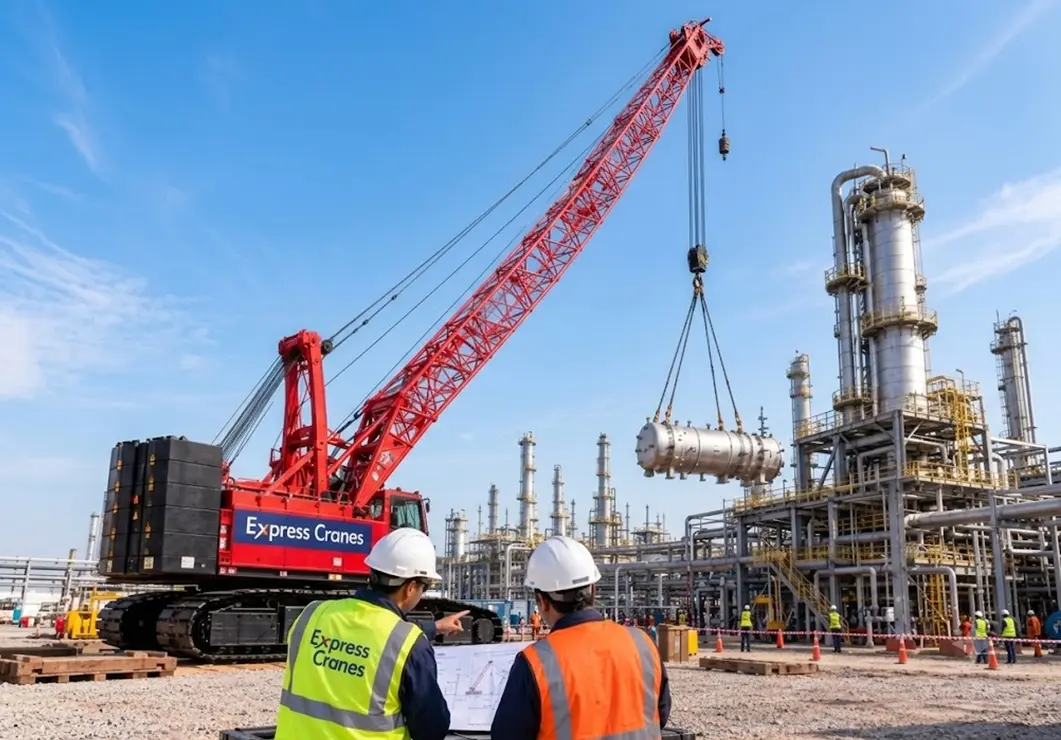
A refinery turnaround operates against a fixed shutdown schedule. Delays in one activity can affect several downstream activities.
That makes lift planning an important part of crane mobilisation.
Before the crane reaches site, the project team should establish:
Express Cranes approach complex lifting through lift planning, load-chart validation, crane configuration, ground-bearing checks and engineering coordination rather than selecting equipment from capacity alone. See our crane rental services.
One of the most common planning mistakes is assuming that a crane rated for a particular tonnage can lift that tonnage in every situation.
Actual lifting capacity can change with:
For refinery shutdown work, the load chart for the proposed crane configuration should be checked against the actual lift conditions before the equipment is mobilised.
Before finalising a refinery shutdown crane rental, the project or procurement team should have the following information ready:
Providing this information early helps the crane rental team evaluate the requirement properly instead of supplying a machine based only on nominal capacity.
Before confirming the crane, ask:
If any of these remain unclear, the crane requirement should be technically reviewed before mobilisation.
For refinery shutdowns, crane selection should happen as part of the lifting plan not after the shutdown has already started.
The most suitable refinery crane rental solution depends on the actual load, lifting radius, site conditions, crane configuration and execution schedule. Getting those details right early can reduce mobilisation problems and prevent avoidable delays during critical lifting operations.
If you have a refinery shutdown, turnaround or heavy equipment lifting requirement, share the load weight, lifting radius, site location and required date with the crane rental team so the appropriate crane configuration can be evaluated before deployment.