
 +91 900 483 2326
+91 900 483 2326
+91 900 483 2326
Large infrastructure projects across India depend on heavy lifting equipment that can operate safely under demanding site conditions. From metro construction and bridge launches to refinery expansions and wind energy installations, lifting operations often involve high loads, large radii, and restricted work zones.
This is where crawler cranes play a critical role.
Unlike standard mobile cranes, crawler cranes are engineered for heavy-duty lifting stability, extended boom configurations, and long-duration project deployment. Their ability to operate on uneven terrain and handle extremely high loads makes them a preferred choice for EPC contractors and infrastructure developers.
In India's infrastructure sector, especially in projects involving highways, bridges, metro rail, and industrial facilities, crawler cranes are frequently used for module lifting, structural installation, equipment positioning, and large-scale assembly work.
Understanding how these cranes work, when they are required, and how they are selected for projects can significantly improve planning and execution efficiency.
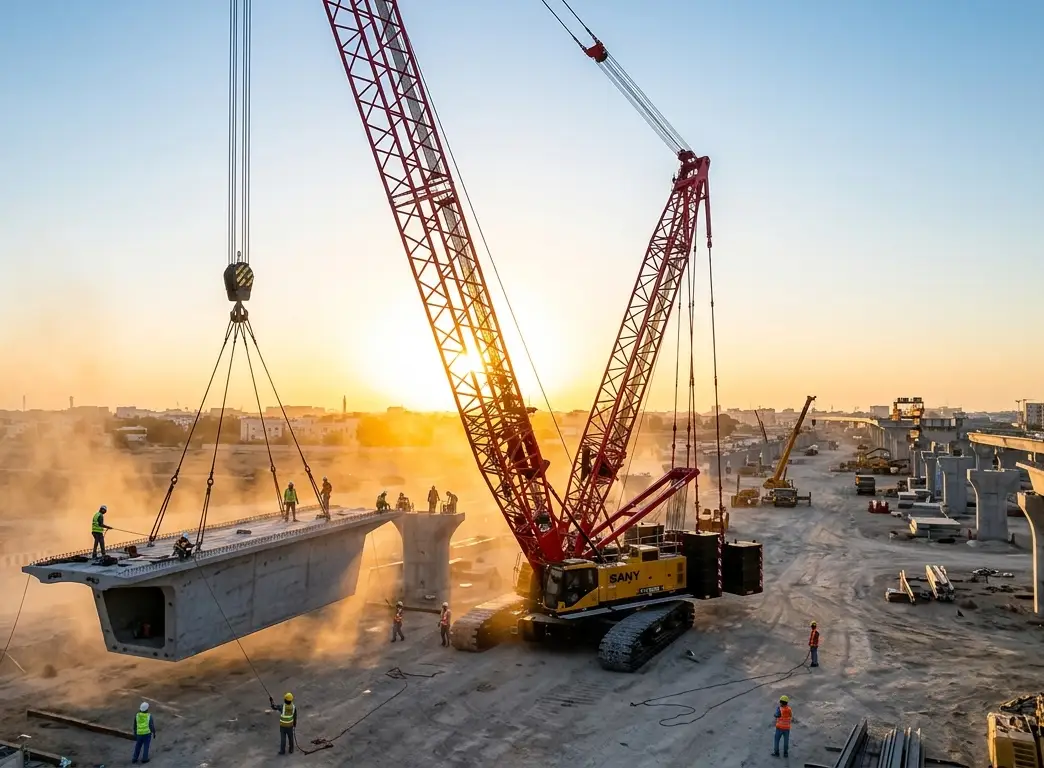
Infrastructure projects typically involve lifting operations that go far beyond routine construction tasks.
Examples include:
Many of these lifts involve heavy loads combined with long working radii.
Traditional mobile cranes may struggle with stability under such conditions, especially on uneven ground. Crawler cranes solve this problem through their tracked undercarriage and wide load distribution, which allows them to handle heavy lifts safely even on challenging project sites.
Another advantage is their ability to remain deployed on site for extended periods, which is common for infrastructure projects that involve multiple lifting sequences over weeks or months.
For a deeper breakdown of capacity ranges, rental costs, and configurations, see this detailed guide: Crawler crane rental cost and capacity guide
Across India, crawler cranes are used extensively in projects involving large-scale structural lifting.
Bridge construction often requires lifting precast segments, launching girders, and positioning structural elements across large spans.
These lifts require cranes capable of handling high loads at extended radii, especially when the crane cannot be positioned directly beneath the lifting point.
Crawler cranes are often selected because they provide the stability required for these high-risk lifting operations.
Metro infrastructure projects involve multiple lifting operations such as:
In dense urban environments, crawler cranes provide controlled lifting performance while supporting heavy structural components.
Many metro projects across Indian cities rely on crawler cranes for precision structural installation.
Wind turbine installation involves lifting extremely large components, including:
These components are both heavy and tall, requiring cranes capable of lifting at significant heights.
Crawler cranes are frequently used in wind energy projects because their configurations allow high-capacity lifting at elevated boom heights.
Refinery construction and maintenance projects often involve lifting heavy modules and processing equipment.
These lifts typically occur in restricted industrial layouts, where stability and load management are critical.
Crawler cranes provide the ability to lift large equipment safely while maintaining stable ground pressure distribution.
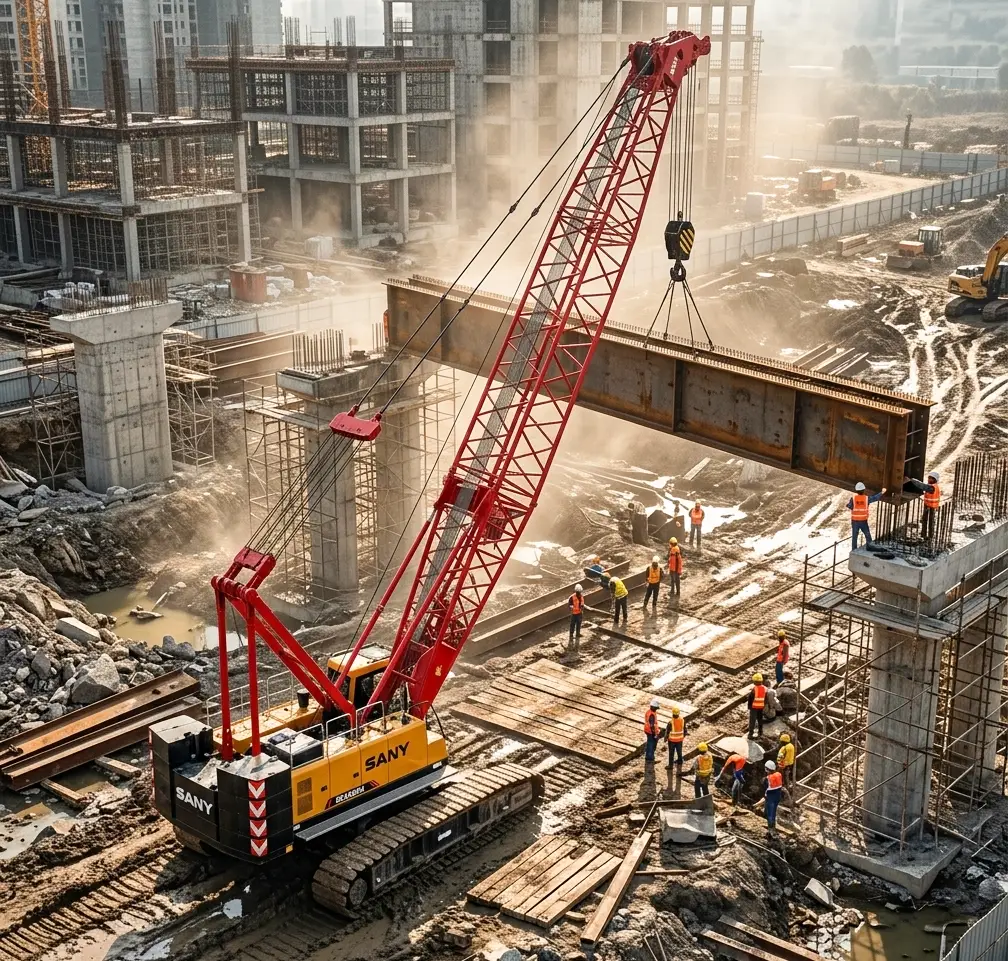
Crawler cranes are capable of lifting extremely heavy loads compared to most mobile crane types.
Large models can handle hundreds of tons, making them suitable for large infrastructure modules and industrial equipment installation.
Infrastructure projects often take place on unfinished or uneven ground.
The crawler track system distributes the crane's weight over a large surface area, allowing it to operate safely even on challenging site conditions.
Unlike mobile cranes that require frequent repositioning, crawler cranes are designed to remain installed on site for extended project phases.
This is particularly useful for projects involving repetitive lifting sequences.
Crawler cranes support multiple boom configurations, enabling them to handle lifts involving:
This makes crawler cranes ideal for heavy infrastructure lifting operations, bridge construction projects, and large industrial installations.
While crawler cranes are often used for heavy infrastructure work, telescopic boom cranes also play an important role.
Find a detailed comparison of these crane types here - Crawler crane vs boom crane comparison
Understanding the differences between these cranes helps project planners select the right equipment for each lifting scenario.
Selecting the right crane is not simply about choosing the highest capacity machine. Multiple factors influence crane selection.
The weight of the component being lifted is the first factor considered during crane planning.
However, load weight alone does not determine the required crane capacity.
Radius refers to the horizontal distance between the crane and the load.
Even relatively small loads may require larger cranes if the lifting radius is significant.
Infrastructure projects often involve lifting components to considerable heights, especially in bridge and wind turbine construction.
Boom length configuration must be planned accordingly.
Site soil conditions influence crane stability and outrigger planning.
Crawler cranes distribute weight efficiently, making them suitable for softer ground conditions compared to many mobile cranes.
Infrastructure projects often involve weeks or months of lifting operations.
Crawler cranes are frequently selected because they can remain installed on site without constant relocation.
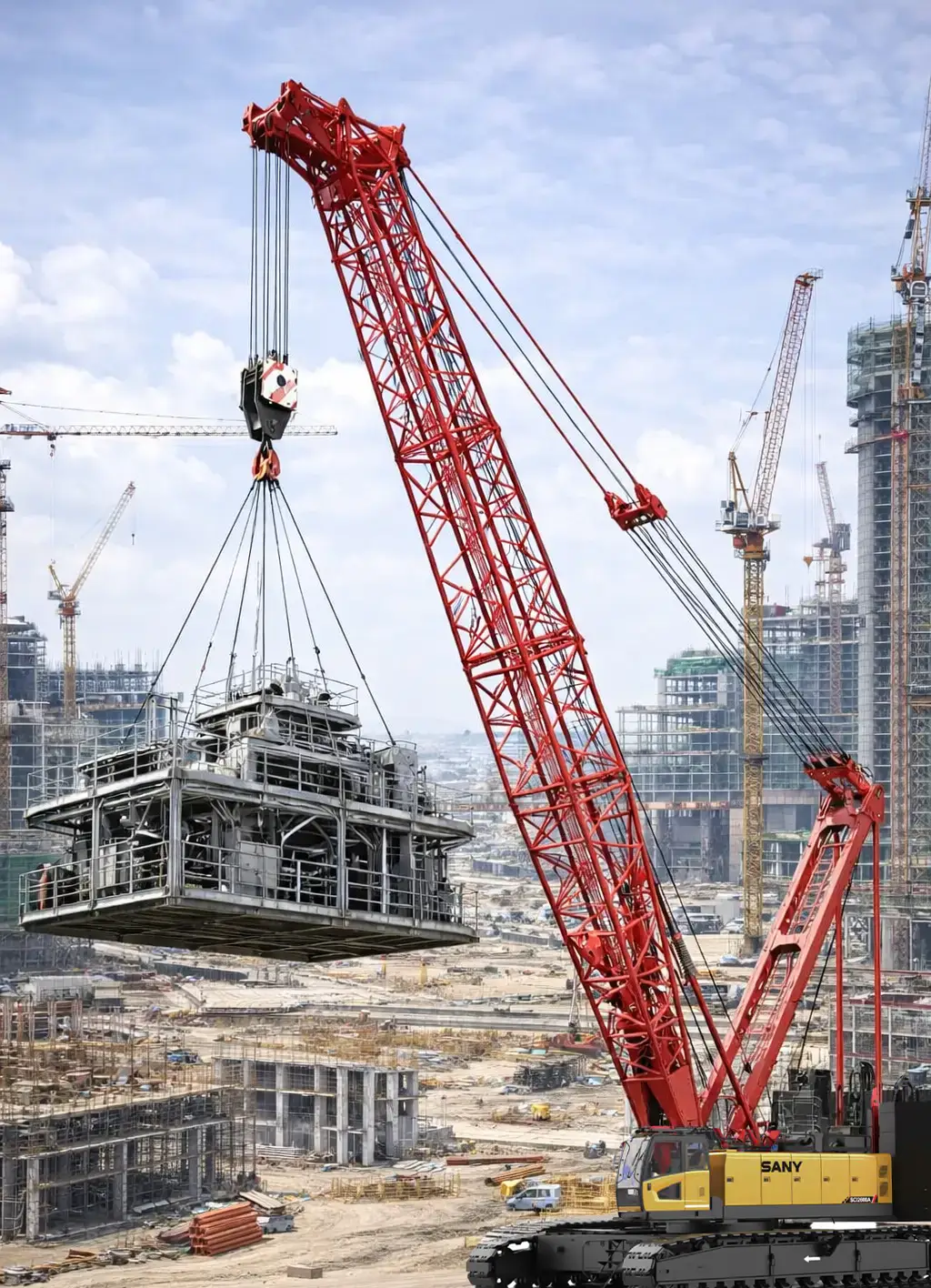
A typical lifting scenario illustrates how crawler cranes support large infrastructure work.
Such planning is common in large EPC projects where crane selection directly affects project timelines.
In infrastructure projects, lift planning is typically finalized after reviewing the crane load chart against the actual lifting radius and boom configuration to ensure safe lifting margins.
Infrastructure contractors usually consider several factors when arranging crane rental.
These include:
Because crawler cranes often require transport and assembly on site, planning usually begins well before the lifting phase.
Sharing technical details early allows crane suppliers to recommend the most suitable configuration.
For projects that require heavy lifting capacity and long-duration deployment, infrastructure contractors often evaluate crawler crane configurations before finalizing equipment selection. You can explore available capacities and project configurations on our crawler crane rental in India.
To avoid delays or incorrect crane selection, project teams typically provide the following details:
With this information, engineers can determine the correct crane capacity and configuration for the project.
Beyond equipment availability, successful lifting operations depend on experience in project coordination and lift planning.
Infrastructure lifts often involve:
Working with crane providers that understand infrastructure lifting requirements helps ensure safer and more efficient project execution.
As India continues expanding its infrastructure network including highways, metro systems, renewable energy projects, and industrial facilities, the demand for high-capacity lifting equipment continues to grow.
Crawler cranes remain one of the most important machines supporting these developments.
Their stability, lifting capacity, and ability to operate on demanding project sites make them an essential asset for infrastructure contractors and project planners.
Understanding how these cranes are selected, configured, and deployed helps ensure that large infrastructure lifts are executed safely, efficiently, and within project timelines.