
 +91 900 483 2326
+91 900 483 2326
+91 900 483 2326
In real project conditions, crane selection is rarely about just load capacity.
Most lifting failures, delays, and cost overruns happen due to one factor:
Incorrect understanding of lifting radius.
If you're planning a lift and evaluating crane selection for high radius lifting in India, you're not just looking for tonnage. You need the right crane for high radius lifting that can safely handle your load at the required distance and height. High-radius lifting is common across industrial zones like Navi Mumbai, Taloja, and major infrastructure corridors across India.
In infrastructure, industrial, and construction projects across India, high-radius lifting is one of the most misunderstood aspects of crane planning. Choosing the wrong crane can lead to:
This guide is written for real decision-makers, project engineers, EPC contractors, and site teams, who need to select the right crane for high-radius lifting scenarios.
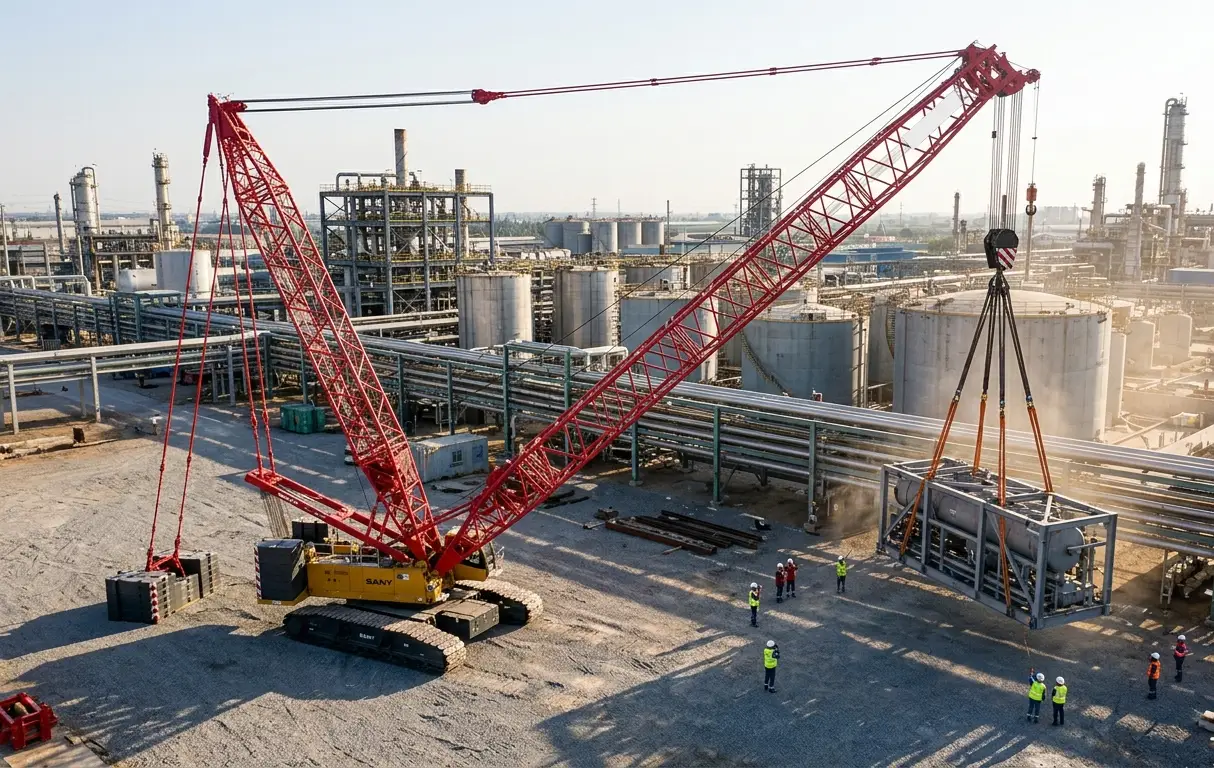
One of the biggest misconceptions in crane rental is:
“If the crane is rated for 50 tons, it can lift 50 tons anywhere.”
This is not true.
Crane capacity reduces significantly as the lifting radius increases.
This is because:
In many Indian project sites, especially in metro construction, industrial plants, and bridge work, crane positioning is restricted. This forces lifting at larger radii, making crane selection more complex. This is where understanding crane capacity vs radius becomes critical for safe and cost-effective lifting.
Common in:
Choosing which crane for long radius lifting depends on how load, height, and radius interact in real site conditions.
For many high-radius scenarios, telescopic cranes are the first choice due to their flexibility and boom extension capability.
Best suited for:
Why they work:
For real project-based crane selection and availability across India, explore:
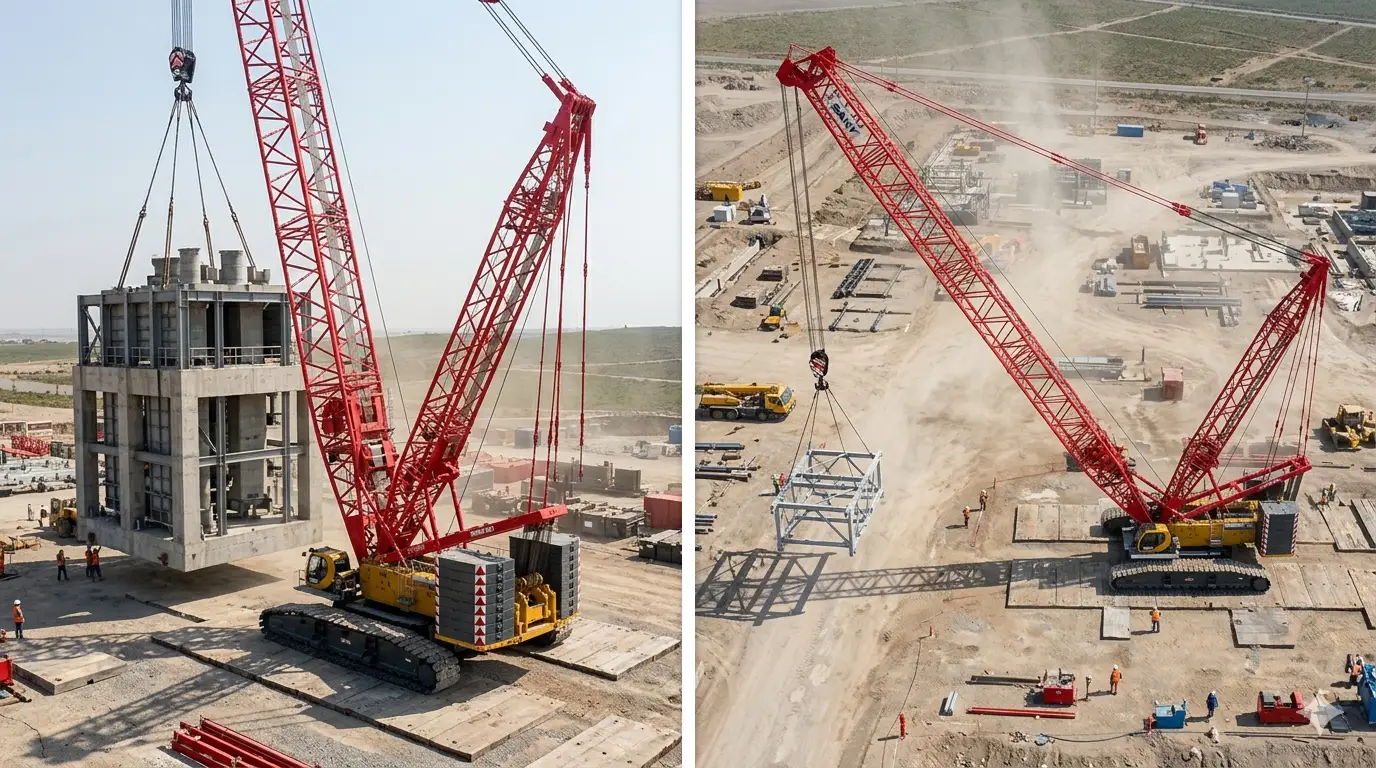
Telescopic Crane Rental (20 Ton to 900 Ton)When lifting loads at a longer radius with higher weight, crawler cranes are often required.
Best suited for:
Why they are preferred:
For heavy lifting at extended radius in infrastructure and industrial projects, see:
Crawler Crane Rental in India - Capacity & AvailabilityAll terrain cranes are used when high capacity and mobility are both required.
Best suited for:
View Crawler Crane Rental in India - Capacity & Availability
Crane selection is not just about “tons”, it's about:
Load Moment = Load Weight X Radius
This means:
Even a small increase in radius can significantly change crane requirements.
This is why engineers rely on:
Ignoring these factors often leads to:
Many project delays happen due to incorrect crane selection based on radius rather than actual lifting conditions.
Ignoring radius leads to under-capacity issues.
Incorrect positioning increases required radius unnecessarily.
Obstacles, access, and ground conditions directly affect crane selection.
High-capacity cranes may not be available instantly.
Every lift must be verified against actual crane configuration.
To ensure correct selection, always evaluate:
Actual weight including rigging.
Horizontal distance from crane to load.
Vertical requirement affects boom configuration.
Long-duration lifts may require different crane types.
If you are planning a lift and need a fast decision reference, use this simplified guide based on real project scenarios:
Small to mid-capacity telescopic crane is usually sufficient for most industrial and construction lifts.
Higher capacity telescopic crane or entry-level crawler crane depending on load and site constraints.
Large telescopic crane or crawler crane required, especially when crane positioning is restricted.
Crawler crane is typically recommended due to better stability and safer load handling at extended radius.
This is why crane selection based on radius is more critical than just choosing a crane based on tonnage.
To avoid incorrect crane selection, share:
This allows accurate crane planning and avoids costly mistakes.
High-radius lifting is where most crane selection decisions go wrong.
It is not about choosing a bigger crane, it is about choosing the right crane for the actual lifting condition.
Across infrastructure, industrial, and construction projects in India, correct crane planning directly impacts:
Understanding how radius affects crane capacity helps ensure that lifting operations are executed smoothly, safely, and without unnecessary delays.
If your project involves high radius crane rental, selecting the wrong crane can lead to delays and safety risks.
Share your requirement including load, radius, and site conditions to get:
Check available crane options: