
Crane Rental for Plant Shutdowns in Navi Mumbai (2026)

February 27, 2026 By Admin

Plant shutdowns are not routine jobs.

They are time-bound, cost-sensitive, and execution-driven.

In industrial zones like TTC, Mahape, Rabale, Taloja and Panvel, shutdown windows are often measured in hours, not days. A delay in lifting equipment can directly impact production restart timelines.
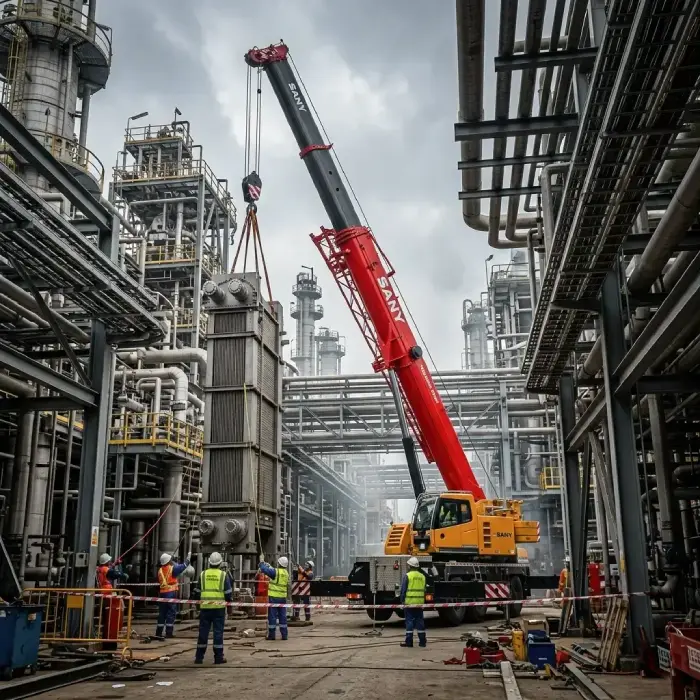
That is why crane rental for plant shutdowns in Navi Mumbai requires engineering planning, not just equipment availability.

In Navi Mumbai's industrial corridors, shutdown lifting often involves heavy equipment repositioning under strict safety supervision and limited operational windows. Crane selection is typically finalized only after evaluating load charts, lifting radius, ground bearing capacity, and site access constraints.

This guide is written for:

  • EPC contractors
  • Plant maintenance heads
  • Project engineers
  • Procurement teams managing shutdown operations

Why Shutdown Lifting Is Different from Regular Crane Rental

A shutdown lift typically involves:


  • Dismantling heavy equipment
  • Replacing critical components
  • Installing upgraded machinery
  • Structural modifications inside active industrial zones

Unlike construction lifting, shutdown operations require:


  • Precise boom configuration planning
  • Tight-radius lifting within plant layouts
  • Gate entry coordination
  • Safety documentation before lift execution
  • Zero room for trial and error

Even a 2-3 hour delay can lead to:


  • Restart delays
  • Idle manpower cost
  • Production losses
  • Contractor penalties

This is why industrial buyers prefer crane companies that understand shutdown execution cycles.

Common Shutdown Lifts in Navi Mumbai Industrial Zones

Across TTC Industrial Area, Mahape MIDC, Rabale MIDC and Taloja MIDC, typical shutdown crane requirements include:

  • Boiler replacement
  • Heat exchanger lifting
  • Transformer installation
  • Reactor vessel shifting
  • Generator replacement
  • Compressor installation
  • Pipe rack modification
  • Structural steel repositioning
  • Heavy equipment unloading
  • Tank installation inside restricted areas

Each of these lifts requires crane selection based on:

  • Load weight
  • Lifting height
  • Lifting radius
  • Ground bearing capacity
  • Access feasibility

Critical Lift Planning During Shutdown

During plant shutdown operations, crane planning is typically finalized only after evaluating:

  • Load chart verification to ensure capacity at required radius
  • Rigging compatibility with equipment lifting points
  • Boom angle limitations inside congested plant layouts
  • Wind speed conditions affecting suspended loads
  • Outrigger load distribution based on ground bearing capacity

In high-risk shutdown lifts, overlooking even one of these factors can lead to operational delays or safety non-compliance.
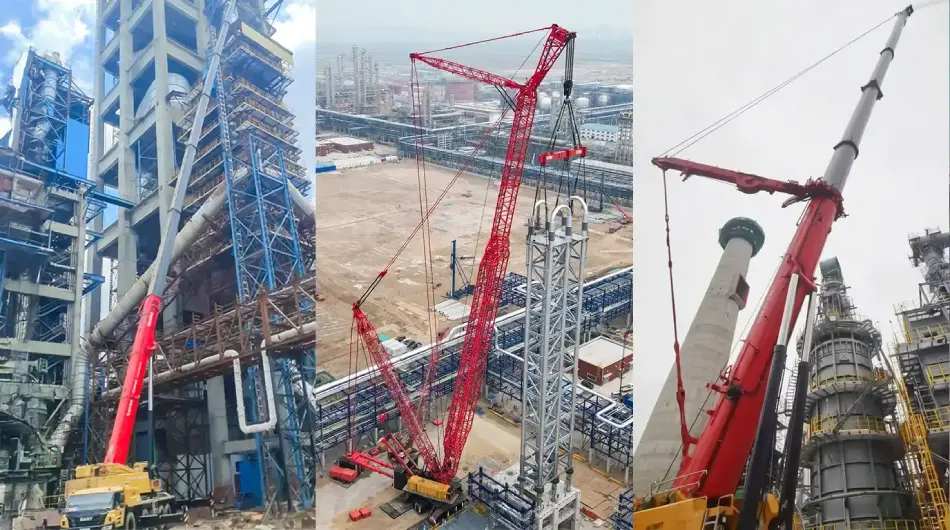
Crane Types Used for Plant Shutdown Projects

1. Telescopic Cranes (20T-900T)


For most shutdown activities, telescopic cranes are the preferred option due to their boom flexibility and height advantage.

Typical use cases:

  • Vertical equipment erection
  • Boiler and chiller placement
  • High-radius lifts inside plant layouts
  • Transformer and generator installation

The required crane capacity is determined not only by load weight but also by radius and boom extension.

For full specifications and configurations, see Express Cranes Telescopic Crane Rental (20T-900T)

2. Crawler Cranes (Heavy & Long Duration Projects)


For most shutdown activities, telescopic cranes are the preferred option due to their boom flexibility and height advantage.

Crawler cranes are suitable for:

  • Large plant expansion shutdowns
  • Heavy module replacement
  • Refinery and infrastructure integration
  • Long-duration lifting sequences

Their stability and load distribution make them ideal where multiple heavy lifts are scheduled over days.

Details here: Crawler Crane Rental

3. All Terrain Cranes (High Capacity with Mobility)


For heavy industrial modules requiring high lifting capacity with road mobility, all terrain cranes are deployed.

Common during:

  • Refinery component replacement
  • Port-linked industrial shutdown lifts
  • Large equipment positioning

Explore capacity options: All Terrain Crane Rental

4. Truck Mounted Cranes (Fast Mobilization)


For quick execution shutdown tasks where:

  • Access roads are narrow
  • Lift duration is short
  • Mobilization speed matters

Truck-mounted cranes are often selected.

See configurations: Truck Mounted Crane Rental

5. Tyre Mounted Cranes (60T-170T)


Used for internal plant shifting and medium-capacity lifts within limited movement zones.

Best suited for:

  • Equipment repositioning
  • Fabrication yard support
  • Controlled-radius internal lifts

View options: Tyre Mounted Crane Rental

What Impacts Crane Selection During a Shutdown?

1. Lifting Radius (Most Misunderstood Factor)


Two lifts with identical load weight can require completely different crane capacities.

Example:

  • 15 tons at 6 meters radius → moderate crane
  • 15 tons at 24 meters radius → significantly larger crane

In Navi Mumbai plants, limited crane positioning often increases required radius.

2. Shutdown Time Window


Is it:

  • 6-hour window?
  • 12-hour window?
  • 48-hour complete maintenance shutdown?

Crane configuration and operator shift planning must align with this schedule.

3. Ground Conditions


Industrial zones may have:

  • Underground pipelines
  • Limited outrigger support area
  • Concrete slab restrictions

Ground assessment directly impacts safe lifting capacity.

4. Entry & Compliance


Industrial clients typically require:

  • Certified operators
  • Load chart compliance
  • Safety documentation
  • Lift planning discussion
  • Site coordination

During shutdowns, documentation delays can postpone crane entry which affects entire timelines.
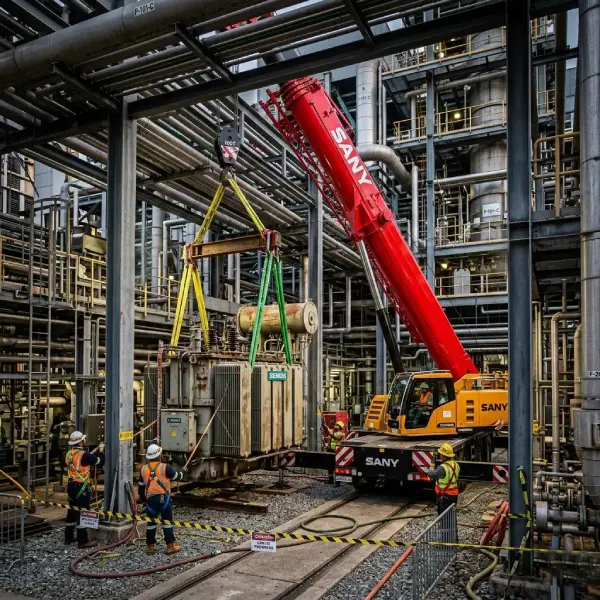
Real Shutdown Lift Example - Navi Mumbai

  • Location:

    TTC Industrial Area, Mahape
  • Load:

    22-ton heat exchanger
  • Radius:

    18 meters
  • Height:

    14 meters
  • Challenge:

    Limited crane positioning between running units
  • Crane Used:

    100T telescopic configuration
  • Execution:

    Completed within scheduled 10-hour shutdown window
  • Key planning factors:

    • Boom length adjustment
    • Counterweight optimization
    • Pre-entry gate approval
    • On-site coordination with plant safety team
  • Result:

    No extension required. Restart schedule maintained.

Shutdown lifts in Navi Mumbai often require pre-lift coordination with plant safety officers and gate control teams to ensure uninterrupted execution within the allotted window.

Shutdown Crane Rental Pricing in Navi Mumbai (2026)

Shutdown pricing is usually structured differently from hourly rental.

Factors include:

  • Crane capacity & configuration
  • Radius requirement
  • Duration (hourly vs shutdown package)
  • Night shift or restricted entry timing
  • Mobilization distance
  • Site constraints

Indicative hourly ranges vary widely depending on configuration and duration. For shutdowns, structured package pricing often reduces cost overruns compared to last-minute hourly extensions.

What to Share for a Fast Shutdown Quote

To avoid delays, share:

  • Load weight (in tons)
  • Lifting height
  • Lifting radius
  • Industrial zone (TTC, Mahape, Rabale, Taloja, Panvel)
  • Shutdown window duration
  • Day/night shift details
  • Ground condition notes

This allows correct crane selection the first time, avoiding oversizing or under-capacity risk.

Why Industrial Teams in Navi Mumbai Choose Express Cranes

Shutdown projects require reliability more than advertising claims.

Industrial teams prefer working with:

  • Fleet options from 20T to 900T
  • Experience across industrial corridors
  • Fast dispatch coordination
  • Clear pricing structure
  • Technical crane selection support
  • Familiarity with plant safety procedures

Execution consistency is what keeps shutdown timelines on track.

If you are planning an upcoming shutdown in TTC, Mahape, Rabale or Taloja, sharing lift details early helps avoid last-minute crane upgrades and timeline risk.

FAQs

Most shutdown lifts use telescopic cranes between 50T-200T, but actual selection depends on load and radius.

For planned shutdowns, booking 3-5 days in advance is recommended. Heavy cranes may require longer lead time.

Yes, certified operators are typically included in industrial crane rentals. Additional rigging support may be arranged if required.

Yes, with every rental all-rentals comes certified operators, as well as full maintenance support.

Get Crane Support for Your Next Shutdown

If your plant shutdown requires safe, time-bound lifting execution in Navi Mumbai, share your lifting details for a quick and accurate crane recommendation.

Fast coordination across:

  • TTC Industrial Area
  • Mahape MIDC
  • Rabale MIDC
  • Taloja MIDC
  • Panvel & surrounding industrial belts